Twice a year, we survey landlords and tenants using our service to gather their thoughts and experiences on renting. This feedback provides a temperature check of attitudes towards the rental market, offering unique insights into changes in the Private Rented Sector (PRS) and what matters to tenants and landlords.
Our half-yearly PRS review combines stakeholder opinions and feedback with market statistics and tenancy data, providing a comprehensive overview of the evolving rental market and attitudes towards the PRS, including future trends.
As the largest provider of deposit protection services in England and Wales, The DPS supports landlords and tenants with a simple, easy-to-use service and top-rated customer experience.
The tenancy deposit market
Since the publication of our last report, the PRS has experienced a momentous change with the implementation of the Renters' Rights Act.
Our latest tenant and landlord surveys were taken immediately after the 1 May implementation, providing a snapshot of the marketplace at the point of transition. The Act introduces limits on the frequency of rent increases and requires landlords to set rents at the local market rate.
Our survey indicates that the majority of landlords plan to maintain current rent levels over the next six months. This may suggest they're allowing a period of time to assess how the changes are affecting their local markets before making any decisions on rent increases.
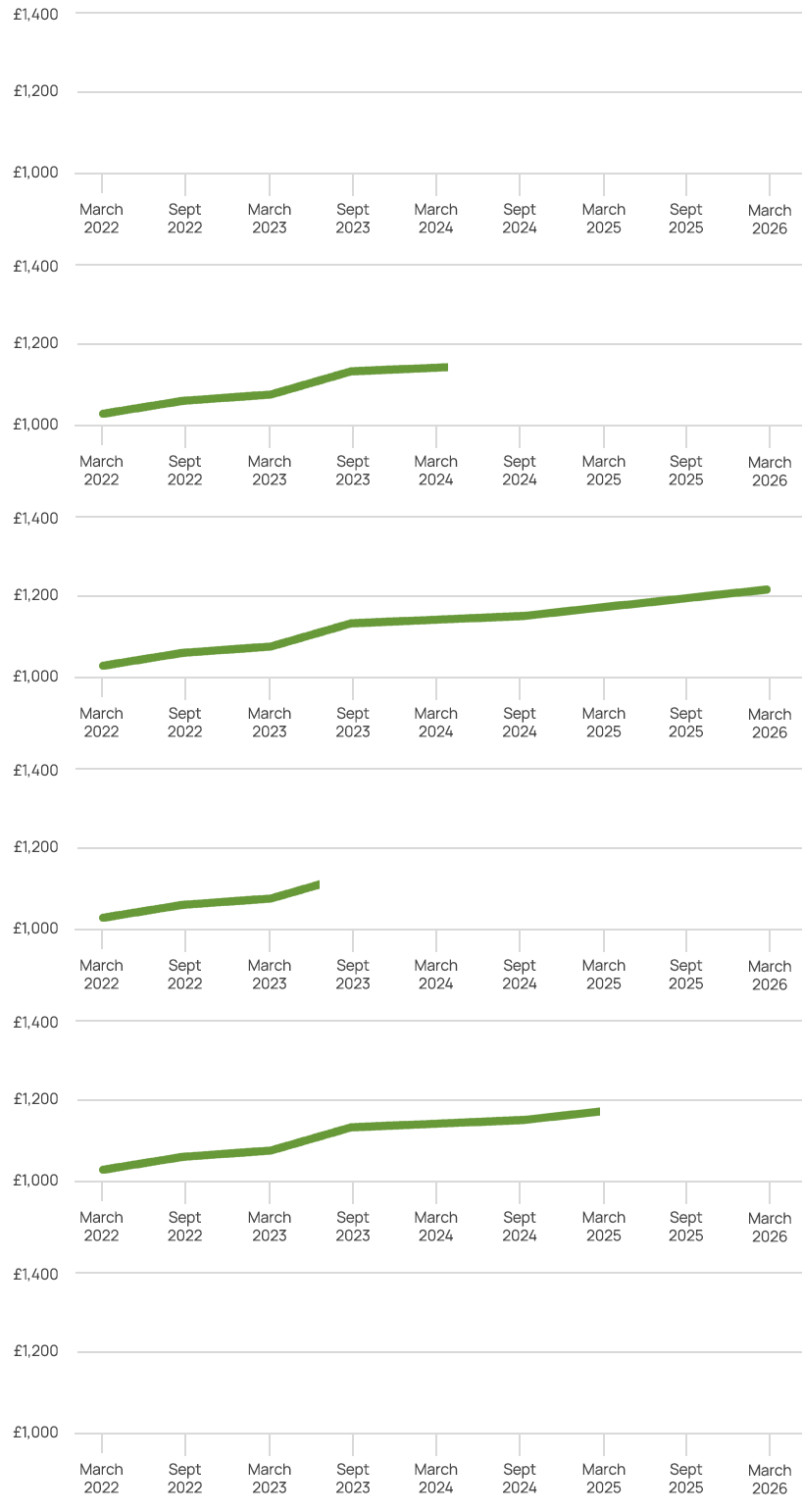
The latest data from the Ministry for Housing, Communities and Local Government (MHCLG) shows the average deposit value in the PRS rose just £13 between 1 October 2025 and 31 March 2026.
With deposits capped in line with rental value, this suggests rents were already stabilising ahead of the Renters Rights' Act implementation, perhaps helped by the Bank of England maintaining its base rate at 3.75% since December 2025.
Our data does however indicate a change in the future intentions of landlords, with the percentage saying they don't plan to increase or decrease their portfolios in the next one to two years falling from 41% to 36% over the last six months.
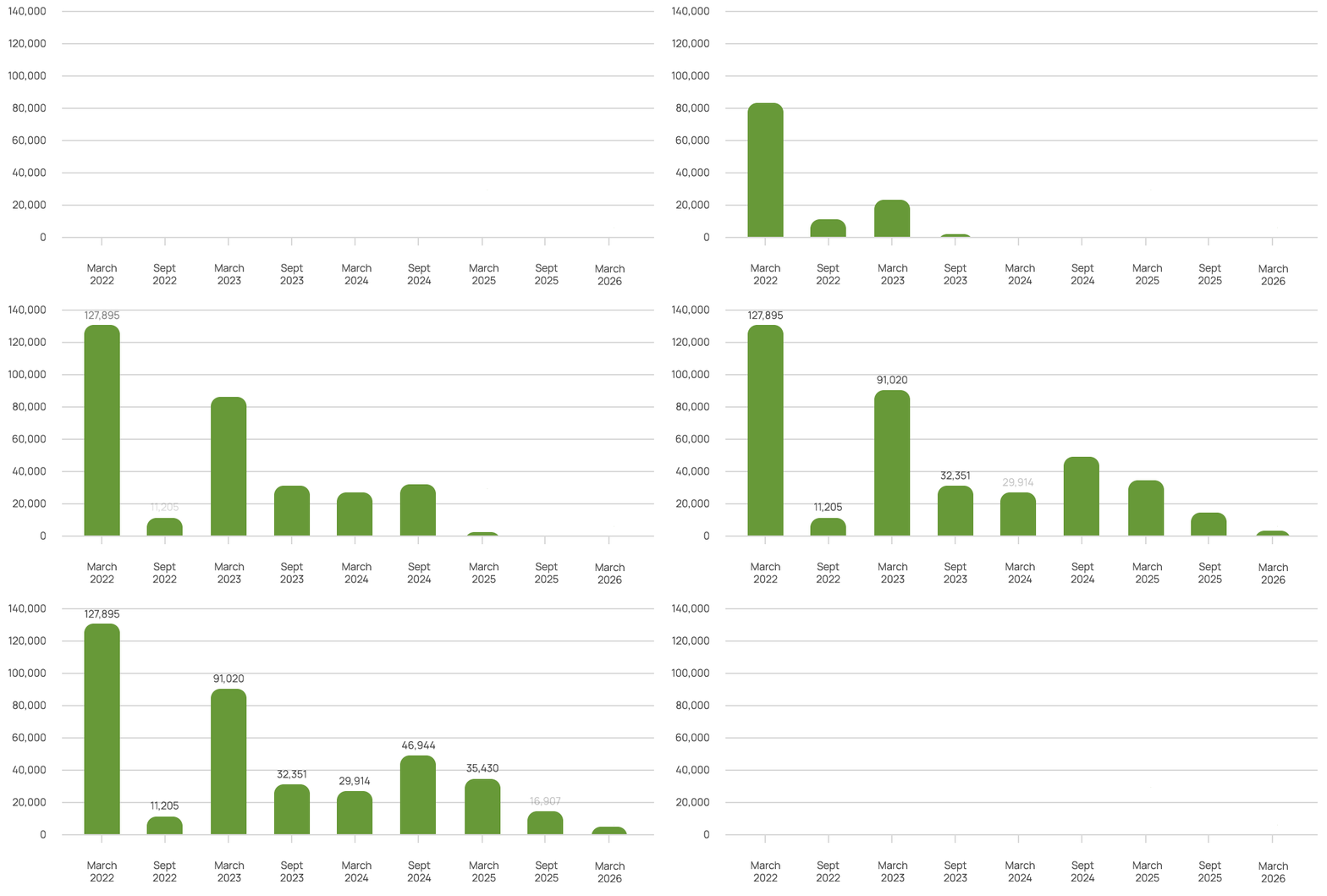
At the same time, those intending to sell some or all of their portfolio rose from 53% in October to 56% in May. As awareness of the Renters' Rights Act and its implications naturally grew ahead of its implementation, some landlords may have considered whether to cash in on their letting portfolios. MHCLG data shows that the six months up to 31 March 2026 had the lowest growth in the number of deposits protected than any other six-month period since reporting began in 2016. Just 5,660 additional deposits were protected, compared to nearly 17,000 in the previous six months, and over 82,000 in the 12 months prior to that. Though some of this decline may reflect fewer landlords taking deposits, there's a strong implication that more people now see the PRS as a challenging sector to operate in. It's also possible the rate of growth has been influenced by the end of "fixed-term" tenancies as part of the Renters' Rights Act implementation, leading to longer lasting tenancies. However, though the growth in the rental market is small, it is still growth.
From a tenant perspective, the need or desire to move into a new rental property has fallen even further, from 33% in October to 29% in May 2026, and a full 7% lower than our March 2025 survey. This may well be due to the end of fixed-term tenancies under the Renters' Rights Act.
The percentage of tenants who did move into a new rental property in the past year has remained stable.
- At 16%, the share of respondents who told us they moved in the last 12 months remained the same percentage as reported in March 2025.
- Long term rentals have seen a significant increase over the last year, with the proportion of tenants staying in properties for over five years now at 57%, compared to 50% in October and 47% in March 2025.
- Conversely the number of one-to-five-year rentals has fallen from 50% to 38% over the same period. Tenancies under one year remain steady at 3%.
Of course, we have yet to see the true impact of the Renters' Rights Act and whether the recent trend towards longer, more stable tenancies will be affected as landlords and tenants adapt to the new regulations.
Market size - July 2026*
Based on 4.73 million deposits

With 1.83 million deposits under our care - 39% of the market – we protect more deposits than any other scheme and are the largest deposit protection provider in England and Wales.
Market share - Custodial vs Insured accounts*
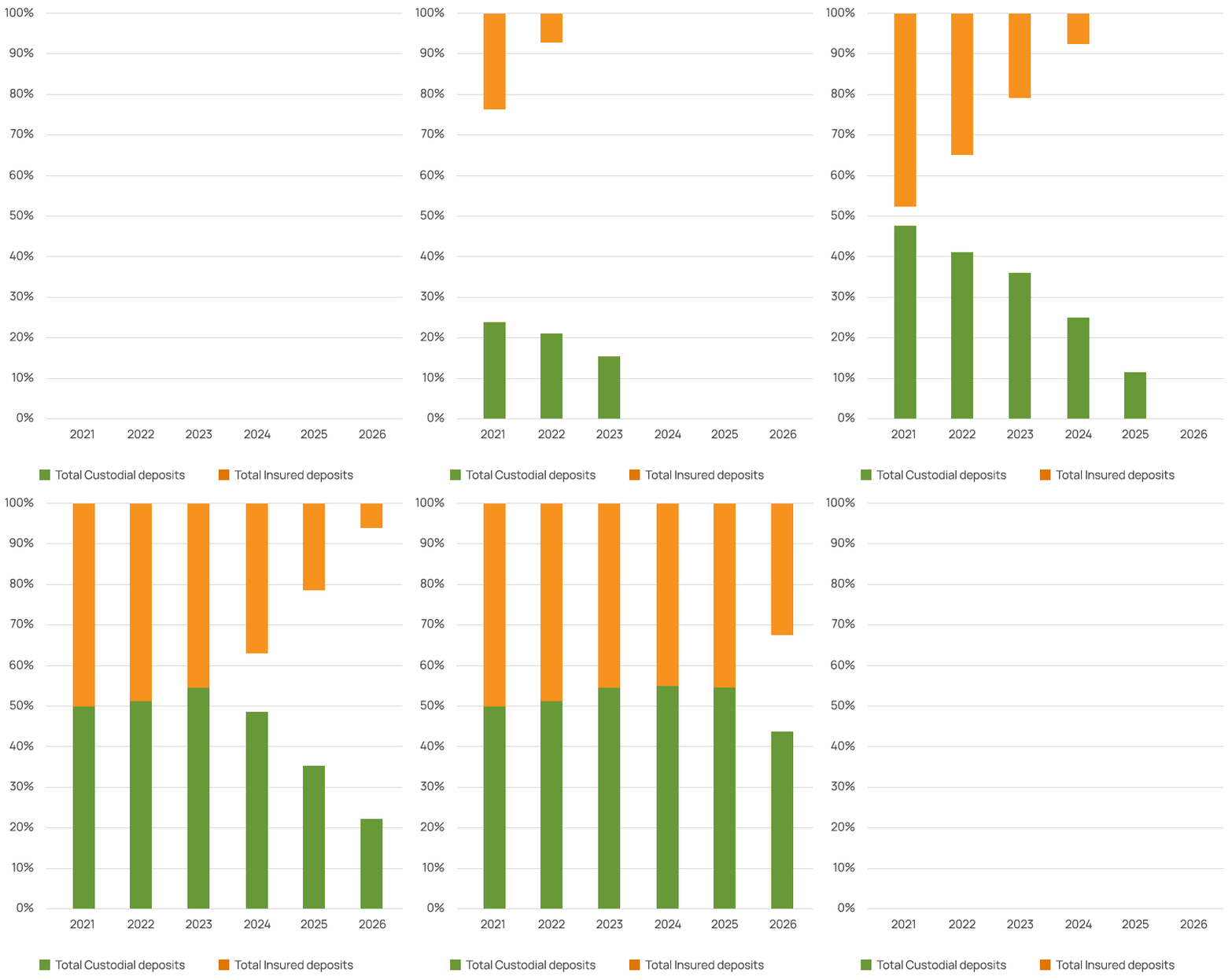
The tenancy deposit market remains relatively static in terms of the choice of deposit protection with only a small change of 0.2% between September 2025 and March 2026.
The last six months saw the smallest half-yearly growth in the number of deposits protected since our records began, increasing by just 5,660 tenancies. Combined with the previous six months, the annual number of new tenancies is the lowest year-on-year growth in the last 10 years, and corresponds with our survey findings that tenants are moving less frequently. Whilst this could be related to the Renters' Right Act, it could also represent market maturity and a general slowdown in the use of tenancy deposits.
Rental market growth rate, based on number of deposits protected*
Is the Renters' Rights Act changing the PRS?
1 May 2026 saw the implementation of the Renters' Rights Act. Our survey snapshots the rental market immediately after this momentous event.
At this stage, it's unknown how the market will react to the changes. However, the declining number of tenancies being added to the market suggests many landlords no longer see the PRS as a favourable investment.

New administrative processes for tenancy agreements and rent reviews

The updated Section 8 notice

A tenant's right to request pets and preparing for this change

New obligations for landlords and letting agents

The Decent Homes Standard

Awaab's Law
This is the biggest single piece of legislative change to impact the PRS in many years. How the market now adjusts and reacts to these changes will be keenly watched by all market participants.
Supporting landlords with the Renters' Rights Act
To help landlords better understand and navigate what the changes mean for them, we recently partnered with Susie Crolla of The Guild of Letting & Management for a series of webinars covering different aspects of the Renters' Rights Act. All five recordings are available on demand so landlords can access Susie's expert insights on the new legislation.

The cost of being a tenant
Though the number of tenancies added to the PRS is low from a deposit value perspective, there's an indication that the average cost of renting continues to increase. The average deposit value in the UK now stands at £1,208, up from £1,195 in our last report and £1,175 in March 2025. With the deposit cap tied to rental values, it implies a monthly average rent of around £966.
*Source: MHCLG - TDP Six Monthly Report July 2026